



AI in Agriculture: Precision Farming with Predictive Analytics
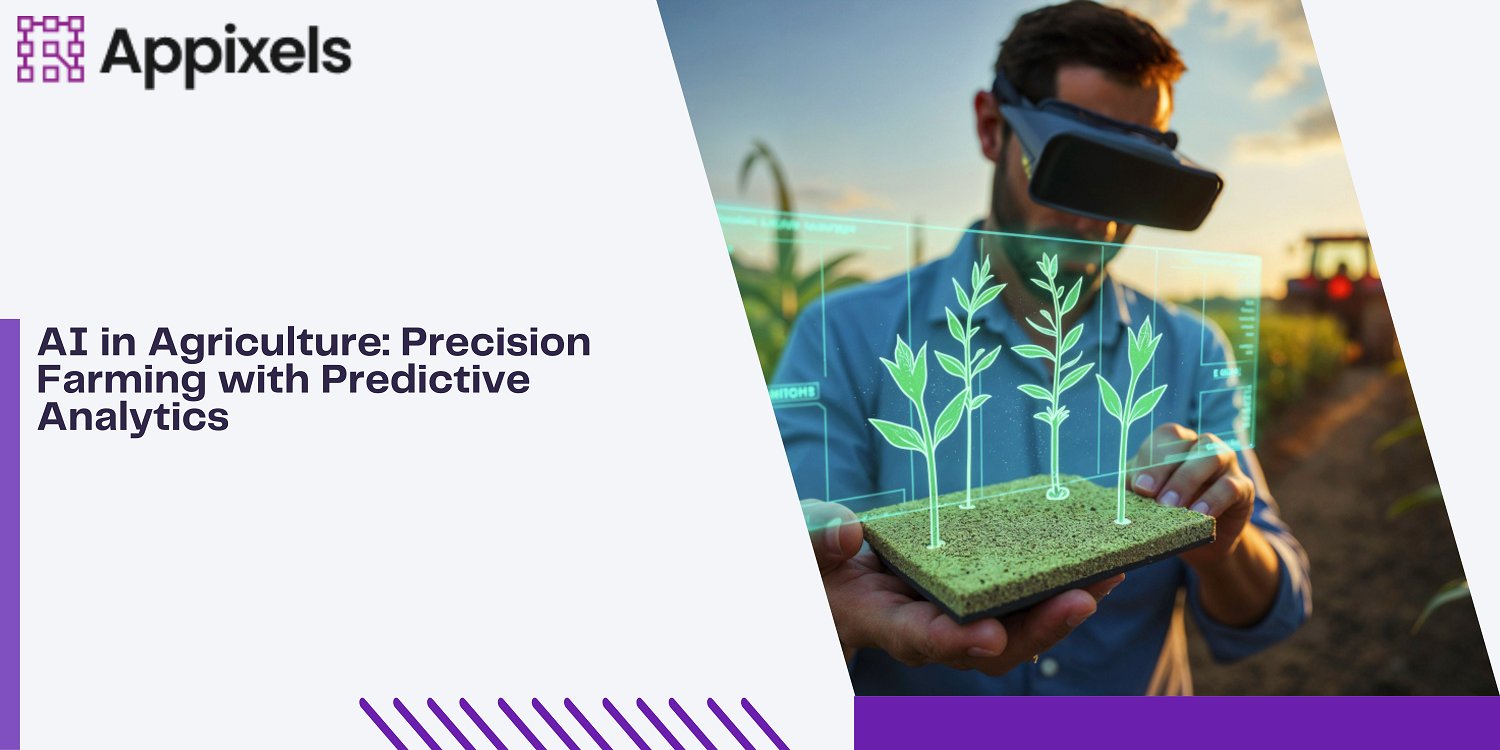
Agriculture has always been a cornerstone of human civilization, but in recent years, the sector has been rapidly transformed by technology. Among the most impactful innovations is Artificial Intelligence (AI), which is revolutionizing how farmers grow crops, manage resources, and maximize yields. One of the most powerful applications of AI in agriculture is predictive analytics, which allows farmers to make informed decisions based on data-driven insights. This article explores the role of AI in agriculture, precision farming, and predictive analytics, and answers some key questions about this technological revolution.
What are Predictive Analytics in Agriculture?
Predictive analytics is the process of using historical data, statistical algorithms, and machine learning techniques to forecast future events. In agriculture, predictive analytics helps farmers anticipate outcomes such as crop yields, pest infestations, soil health, and irrigation needs.
For example, by analyzing data on soil moisture, weather patterns, and crop growth, AI models can predict the best time to plant seeds, when to apply fertilizers, and when to harvest. This not only reduces waste but also increases efficiency and profitability. Predictive analytics also supports risk management, helping farmers prepare for potential challenges like droughts or disease outbreaks.
How Can AI Be Used in Predictive Analytics?
AI plays a central role in predictive analytics by processing large volumes of agricultural data that would be impossible for humans to analyze manually. Here’s how AI contributes:
- Data Collection and Processing: AI collects data from IoT devices, drones, satellites, and sensors installed in fields. This includes soil moisture, temperature, humidity, and crop growth data.
- Pattern Recognition: Machine learning algorithms identify patterns and correlations between environmental factors and crop performance.
- Forecasting Outcomes: AI predicts potential risks such as pest infestations, crop diseases, and yield fluctuations.
- Decision Support: Farmers receive actionable recommendations, such as optimal irrigation schedules or fertilization strategies.
By combining AI and predictive analytics, farmers can make proactive decisions, reduce costs, and improve sustainability.
What is the Role of AI in Agriculture Development?
AI is transforming agriculture from traditional practices to smart farming, enabling greater efficiency and sustainability. The main roles of AI in agriculture development include:
- Precision Farming: AI helps apply water, fertilizers, and pesticides precisely where needed, minimizing waste and environmental impact.
- Yield Optimization: AI analyzes historical crop data and environmental conditions to improve crop productivity.
- Disease and Pest Management: AI detects early signs of crop diseases or pest infestations, allowing timely interventions.
- Resource Management: AI helps manage water usage, energy, and labor efficiently.
- Supply Chain Optimization: AI predicts demand, improves logistics, and reduces post-harvest losses.
Through these applications, AI contributes to sustainable agriculture and ensures global food security.
Which AI Tool is Best for Agriculture?
Several AI tools are available for agriculture, and the best choice depends on the specific needs of a farm. Some popular AI tools include:
- IBM Watson Decision Platform for Agriculture: Provides predictive analytics and AI-driven insights for crop management.
- John Deere’s See & Spray Technology: Uses AI and computer vision to identify weeds and apply herbicides selectively.
- Microsoft Azure FarmBeats: Combines IoT, AI, and cloud computing to monitor soil and crop health.
- Taranis: Uses AI-powered aerial imagery to detect pests, diseases, and nutrient deficiencies.
- CropX: AI-based soil analytics platform for irrigation and fertilization optimization.
Choosing the right AI tool depends on factors such as farm size, type of crops, budget, and data availability.
What is the Difference Between AI and Predictive Analytics?
While AI and predictive analytics are closely related, they are not the same:
- Artificial Intelligence (AI): A broader concept that involves machines simulating human intelligence, including learning, reasoning, and problem-solving.
- Predictive Analytics: A specific application of AI that focuses on analyzing historical data to predict future outcomes.
In simple terms, AI is the engine, and predictive analytics is one of its most powerful applications in agriculture. AI powers predictive models, which in turn provide actionable insights to farmers.
What is the 30% Rule in AI?
The 30% rule in AI refers to the idea that AI implementations typically provide around 30% improvement in efficiency, productivity, or decision-making when applied correctly. In agriculture, this means that farms using AI-driven predictive analytics could potentially increase crop yields, reduce input costs, and optimize resource usage by roughly 30% compared to traditional methods.
This rule emphasizes that while AI is powerful, it is not a magic solution. Its effectiveness depends on data quality, model accuracy, and proper implementation.
Is ChatGPT Generative or Predictive AI?
ChatGPT is primarily a generative AI, which means it creates content based on patterns it has learned from vast amounts of text data. Generative AI produces text, images, or other outputs by predicting the most likely next word or sequence, but it does not perform predictive analytics in the traditional sense.
In contrast, predictive AI in agriculture analyzes data to forecast outcomes, such as crop yields or pest infestations. Both generative and predictive AI share similar machine learning foundations, but their purposes differ: content generation versus data-driven forecasting.
What Are the Four Types of AI Models?
AI models can be categorized into four main types, each with applications in agriculture:
- Supervised Learning: Models are trained on labeled data to predict outcomes. Example: Predicting crop yield based on soil and weather data.
- Unsupervised Learning: Models identify patterns in unlabeled data. Example: Clustering similar soil types for precision farming.
- Reinforcement Learning: Models learn by trial and error to maximize rewards. Example: Optimizing irrigation schedules for water efficiency.
- Generative Models: AI generates new data based on learned patterns. Example: Creating synthetic crop growth scenarios to test farming strategies.
By combining these models, farmers and agritech companies can develop sophisticated AI solutions for precision farming.
Benefits of AI-Powered Predictive Analytics in Agriculture
- Increased Efficiency: AI reduces manual labor and automates data analysis.
- Higher Crop Yields: Predictive insights allow farmers to make optimal planting and harvesting decisions.
- Cost Reduction: Precise use of fertilizers, water, and pesticides lowers expenses.
- Sustainability: Minimizing resource waste and environmental impact supports eco-friendly farming.
- Risk Management: Early detection of pests, diseases, and weather risks protects crops.
Challenges of Implementing AI in Agriculture
Despite its benefits, AI adoption in agriculture faces several challenges:
- High Initial Costs: AI tools, drones, and sensors require significant investment.
- Data Availability: Accurate predictive analytics depend on high-quality data.
- Technical Expertise: Farmers may need training to implement and interpret AI solutions.
- Integration with Existing Systems: Legacy farming practices may not easily adapt to AI.
Addressing these challenges is critical for maximizing the impact of AI in agriculture.
Conclusion
AI and predictive analytics are reshaping the agricultural landscape, making precision farming more effective, sustainable, and profitable. By leveraging AI tools, farmers can make data-driven decisions, optimize resources, and reduce risks. While challenges exist, the potential benefits—higher yields, lower costs, and improved sustainability—make AI a transformative force in modern agriculture.
As technology continues to evolve, the integration of AI in agriculture promises a future where farms are smarter, crops are healthier, and global food security is strengthened.
Tags:
