



The Future of AI in Space Exploration: Autonomous Rovers and Intelligent Satellites
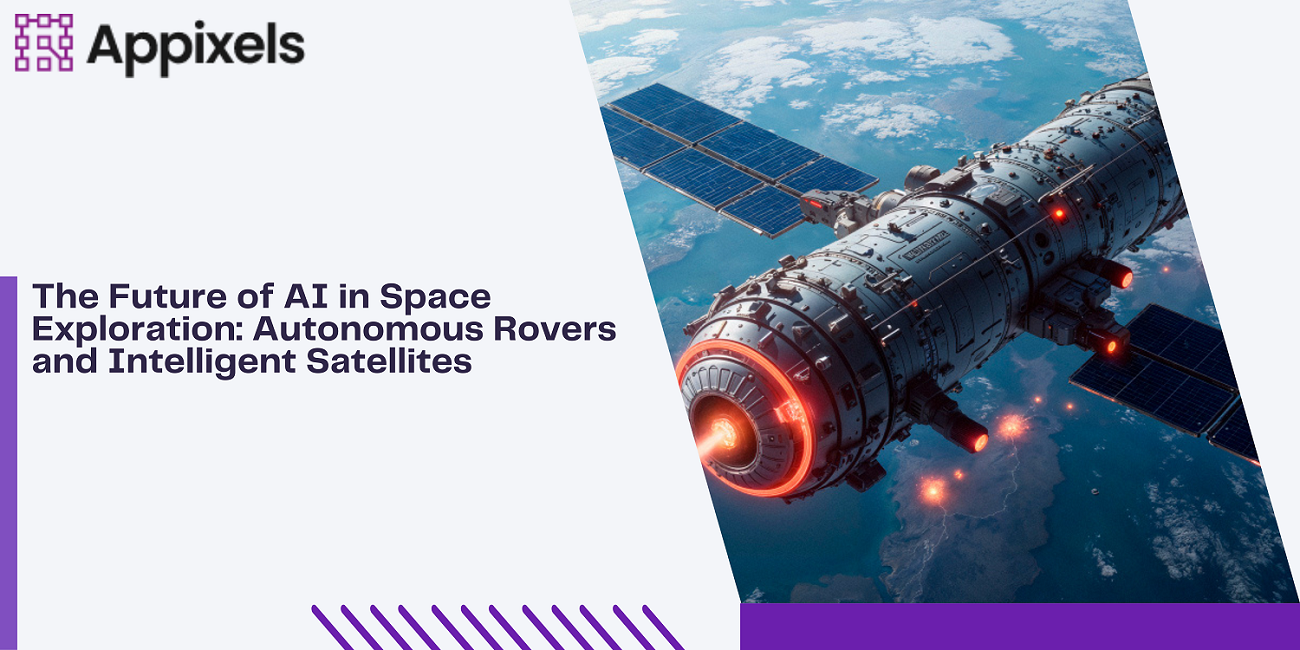
Artificial Intelligence (AI) is transforming multiple industries on Earth, but its impact on space exploration is nothing short of revolutionary. From autonomous rovers exploring Mars to intelligent satellites monitoring Earth and beyond, AI is enhancing our ability to explore and understand the cosmos. This article delves into the future of AI in space exploration, highlighting key use cases, technological advancements, and the questions surrounding AI’s role in space.
What is NASA's Use Case of AI?
NASA has been at the forefront of integrating AI into space missions. One of its most prominent use cases is in autonomous rovers, such as Perseverance and Curiosity, which are exploring the Martian surface. These rovers use AI-powered algorithms to navigate rough terrains, avoid obstacles, and select scientifically interesting rocks and soil samples without real-time human input.
Beyond rovers, NASA employs AI for spacecraft health monitoring. Machine learning algorithms analyze telemetry data to predict component failures, optimize fuel consumption, and enhance the safety and efficiency of missions. AI is also used in mission planning, where it can simulate thousands of mission scenarios, helping scientists make informed decisions quickly.
How is AI Used in the Aerospace Industry?
AI is not just transforming space exploration; the aerospace industry as a whole benefits from intelligent systems. In spacecraft design, AI assists engineers by optimizing aerodynamics, fuel efficiency, and structural integrity. Predictive maintenance powered by AI allows aircraft and spacecraft to operate safely while reducing downtime and costs.
AI also enables autonomous flight systems. Drones, satellites, and even next-generation spacecraft are incorporating AI for real-time decision-making. In satellite operations, AI helps manage vast amounts of Earth observation data, detecting changes in weather, climate patterns, and urban development.
When Was AI First Used in Space Exploration?
The use of AI in space exploration dates back several decades. One of the earliest instances was during the 1970s with NASA's Viking missions to Mars. The Viking landers used basic AI algorithms for autonomous navigation and hazard detection.
Since then, AI’s role has expanded dramatically. The 1997 Mars Pathfinder mission utilized rudimentary AI for rover navigation. Today, modern missions rely on advanced machine learning and deep learning algorithms, enabling rovers and satellites to make autonomous decisions with unprecedented accuracy.
Which Country is No. 1 in AI?
While AI development is a global effort, the United States is widely regarded as the leader in AI technology, particularly in space applications. NASA, SpaceX, and other US-based organizations invest heavily in AI research and deployment. China follows closely with significant investments in AI-powered aerospace systems, including autonomous satellites and lunar rovers.
European countries, India, and Russia are also making notable strides. India’s ISRO (Indian Space Research Organisation) is increasingly integrating AI in satellite operations, planetary exploration, and mission simulations.
Can AI Replace Astronauts?
AI has the potential to complement astronauts but is unlikely to replace them entirely in the near future. Autonomous systems, rovers, and intelligent satellites can perform routine or hazardous tasks that would be dangerous or impossible for humans. For example, AI-powered robots can explore extreme environments like Mars, asteroids, or the Moon, collecting samples and conducting experiments remotely.
However, human ingenuity, decision-making under uncertainty, and adaptability are qualities AI cannot fully replicate. Instead, AI acts as an augmentation tool, enhancing astronauts’ efficiency and safety.
The 7 Main Types of AI
Understanding the different types of AI provides insight into how these systems operate in space exploration. The seven main types are:
- Reactive Machines – Basic AI systems that respond to specific inputs without memory. Example: Early Mars rovers’ navigation algorithms.
- Limited Memory – AI that uses historical data to inform decisions. Example: AI systems predicting spacecraft component failures.
- Theory of Mind – AI that can understand emotions and intentions, still largely experimental.
- Self-Aware AI – A theoretical type capable of consciousness; not yet realized.
- Narrow AI (Weak AI) – AI specialized in one task. Most space exploration AI falls into this category.
- General AI (Strong AI) – AI capable of performing any intellectual task that a human can do. Still in research.
- Superintelligent AI – Hypothetical AI surpassing human intelligence; currently speculative.
In space exploration, narrow AI and limited memory AI are the most widely used, powering autonomous navigation, satellite imaging analysis, and spacecraft monitoring.
Is ISRO Using AI?
Yes, ISRO is increasingly leveraging AI for space missions. Indian satellites use AI for Earth observation, weather prediction, and disaster management. AI algorithms help process vast datasets from satellites to identify environmental changes and monitor urban expansion.
Additionally, ISRO is exploring AI integration in future lunar and interplanetary missions, including autonomous rover navigation and spacecraft system diagnostics. These initiatives demonstrate India’s commitment to adopting AI as a strategic tool in aerospace innovation.
Can AI Replace Aeronautical Engineers?
AI cannot completely replace aeronautical engineers but can enhance their capabilities. Engineers rely on AI for simulation, design optimization, and predictive analytics, significantly reducing the time and resources required for complex calculations.
AI can automate repetitive tasks like data analysis, testing, and error detection, allowing engineers to focus on creative problem-solving and mission-critical decisions. In essence, AI acts as a powerful assistant rather than a replacement.
Autonomous Rovers: Exploring Planets Independently
Autonomous rovers are a prime example of AI in action. Equipped with cameras, sensors, and machine learning algorithms, these rovers can navigate uncharted terrain, identify scientific targets, and even drill and collect samples. The ability to make real-time decisions reduces reliance on slow Earth-to-space communications, which can take several minutes to hours depending on distance.
Future developments in AI may allow rovers to collaborate in swarms, sharing data to optimize exploration and increase mission efficiency.
Intelligent Satellites: Monitoring Earth and Beyond
AI-powered satellites are revolutionizing how we observe our planet and space. Intelligent satellites use AI for image recognition, anomaly detection, and predictive analytics. For instance, AI can detect forest fires, monitor glaciers, track hurricanes, and even predict equipment malfunctions.
In deep space, satellites can autonomously adjust their orbits, optimize energy consumption, and prioritize data transmission. This intelligent autonomy reduces operational costs and increases mission resilience.
Challenges and the Future of AI in Space
While AI offers enormous potential, challenges remain. Space environments are harsh, unpredictable, and data-intensive, requiring AI systems to be highly robust and fault-tolerant. Ethical considerations, cybersecurity risks, and the need for explainable AI also pose significant hurdles.
Nevertheless, the future is promising. Hybrid missions combining human astronauts with AI-driven systems, self-learning rovers, and autonomous interplanetary spacecraft are on the horizon. AI will not only expand humanity’s reach in space but also deepen our understanding of the universe.
Conclusion
The future of AI in space exploration is both exciting and transformative. From autonomous rovers navigating alien landscapes to intelligent satellites monitoring Earth and beyond, AI is reshaping the boundaries of what is possible. While it cannot fully replace humans, it complements our efforts, enhances efficiency, and opens doors to missions once considered impossible. As NASA, ISRO, and other global space agencies continue to integrate AI into their missions, the cosmos is becoming more accessible than ever before.
Tags:
